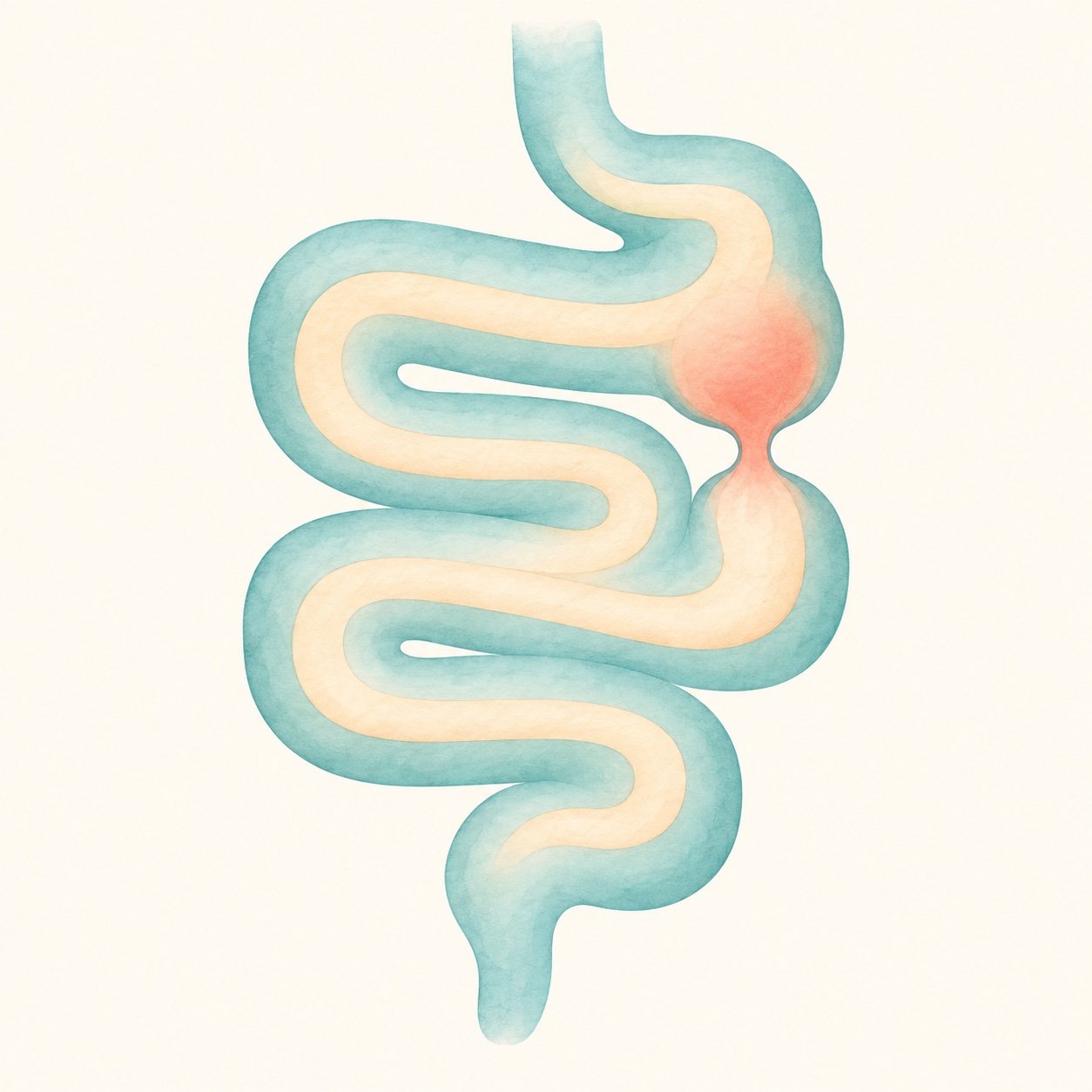
Your child keeps vomiting, the tummy looks swollen and tight, and nothing is passing from below — no stool, no wind. This frightening picture can mean the bowel is blocked. Doctors call this intestinal obstruction. It is one of the most common reasons a child needs an emergency operation. Here is what a blockage is, what causes it at different ages, the warning signs, and how it is treated.
What Does “Blocked Bowel” Mean?
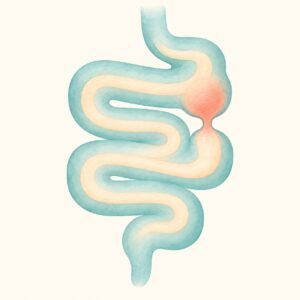
The bowel is a long tube. Food and fluid normally move down it in one direction. In an obstruction, something stops that flow at some point along the tube. Fluid, gas and food then build up above the block. This is why the tummy swells and the child vomits. If the block is not relieved, the trapped bowel can lose its blood supply, get injured, and even develop a hole. That is why a true blockage is an emergency.
The Causes Depend on the Child’s Age
A newborn and an older child block their bowel for very different reasons.
In newborns, the block is usually something the baby was born with, or an illness of the first days of life. Common causes are a part of the bowel that did not form a proper opening (atresia), a twist of the bowel from an abnormal position (malrotation and volvulus), a missing nerve supply to the lower bowel (Hirschsprung disease), thick blocked meconium (the first stool), or a bowel emergency of premature babies (necrotizing enterocolitis). Each of these has its own article on this site.
In older children, the single most common cause of a small-bowel block is scar tissue (adhesions) from a previous tummy operation — this is behind about 60 out of 100 blockages. Other causes include a hernia that traps a loop of bowel, one segment of bowel sliding into the next (intussusception), inflammatory bowel disease, and, less often, a twist of the large bowel or a tumour. A child who had bowel surgery as a baby can block years later from adhesions.
Warning Signs
Watch for this group of signs together:
- Vomiting that turns green (bilious). Green vomit in a baby is always an emergency. As a block gets worse, the vomit can become brown and smell like stool.
- A swollen, tight tummy.
- Crampy tummy pain that comes in waves.
- No stool and no wind (gas) passing.
An early blockage can look like a simple stomach upset. What sets it apart is that it does not settle, the vomit turns green, and the child stops passing wind or stool. Green vomiting, a swollen tummy, or a child who is in pain and passing nothing needs emergency care the same day.
A Special Warning: Swallowed Magnets
If a child swallows more than one magnet (or a magnet and a metal object), the pieces can pull towards each other through the walls of two different loops of bowel. They pinch the bowel between them, cut off its blood supply, and cause a block or a hole. This is a surgical emergency and usually needs an urgent operation. Keep small strong magnets well away from children.
How Doctors Diagnose a Blockage
The doctor first examines the child and looks at the tummy. A plain tummy X-ray is the key first test. In a blockage it shows swollen loops of bowel and flat pools of fluid and gas, called air-fluid levels. Free air in the tummy on the X-ray means the bowel has developed a hole. A blood test showing a high white-cell count can be a sign that the trapped bowel is being injured. When the picture is not clear, doctors may use an ultrasound, a CT scan, or a special X-ray taken after the child swallows or is given dye.
How a Blockage Is Treated
Treatment depends on the cause and on how sick the child is.
Rest and tube treatment. For a partial blockage from adhesions, without fever, severe pain or signs of injured bowel, doctors often start without surgery. They stop feeds, give fluids into a vein, and pass a thin tube through the nose into the stomach to drain the trapped fluid and let the bowel settle. The child is watched closely with repeated examinations, X-rays and blood tests. This settles the blockage in about 74 out of 100 children. But the blockage comes back at some later time in about 36 out of 100 treated this way.
Surgery. A complete blockage, or a child with fever, worsening pain, or signs that the bowel is being injured, needs an operation without delay. What the surgeon does depends on the cause — dividing the scar tissue, untwisting a volvulus, freeing a trapped hernia, or removing a damaged part of the bowel. Newborn causes (atresia, malrotation, Hirschsprung, meconium ileus, NEC) almost always need an operation. Sometimes the surgeon brings the bowel out onto the tummy as a temporary opening called a stoma, to let it heal, and closes it in a later operation.
What Every Parent Must Know
- A blocked bowel is an emergency. Trapped bowel can lose its blood supply and develop a hole.
- Green (bilious) vomiting, a swollen tummy, and passing no stool or wind — this group of signs needs emergency care the same day.
- The cause depends on age. In newborns it is usually something present from birth. In older children the commonest cause is scar tissue from an earlier operation.
- A partial blockage from scar tissue often settles with tube rest, but it can come back later.
- A complete blockage, or signs of injured bowel, needs an operation without delay.
- Swallowing more than one magnet is a surgical emergency.
When to See a Doctor
Go to hospital urgently if your child has green vomiting, a swollen tight tummy, crampy pain that will not settle, or has stopped passing stool and wind. This matters even more if your child has had a tummy operation before, because scar tissue can block the bowel years later. Do not wait at home to see if it settles, and do not give laxatives or feeds to a child who may be blocked. Ask for a pediatric surgeon to be involved early.
Dr. Tanmay Motiwala is a pediatric surgeon in Raipur, Chhattisgarh, trained at AIIMS Jodhpur. He assesses and operates on newborns and children with bowel blockage and other surgical emergencies from across Chhattisgarh and central India.
Related reading:
- My Baby’s Vomit Turned Green — Why This Is an Emergency
- My Baby Has Sudden, Severe Stomach Pain and Passed Blood in the Stool — What Is Intussusception?
- My Child Needs a Stoma (Colostomy or Ileostomy) — What Does It Mean?
📋 This article is part of Dr. Motiwala’s General & Abdominal Surgery in Raipur services — see the full range of conditions treated, what to expect, and when to see a pediatric surgeon.
Related conditions parents also read
- Green vomiting in a baby (malrotation and volvulus)
- Sudden tummy pain and blood in the stool (intussusception)
- Baby not passing stool since birth (Hirschsprung disease)
Worried about your child? Dr. Tanmay Motiwala consults in Raipur, Jagdalpur & Rajim. Book an appointment or call +91 83190 84711.
⚠️ Important Disclaimer: This article is for general information and educational purposes only. It is not a substitute for professional medical advice, diagnosis, or treatment. Every child’s condition is different — facts, prognosis, and management can vary significantly from case to case. Please consult a qualified pediatric surgeon for advice specific to your child.
Sources: Coran’s Pediatric Surgery (7th ed), Ch. 87 (Other Causes of Intestinal Obstruction), Stehr & Gingalewski; Rob & Smith’s Operative Pediatric Surgery (7th ed).