
Your baby’s umbilical cord stump has dried up and dropped off — right on time — but instead of a clean, healed navel you see a small pink or red lump in the middle, and it stays wet. It may weep a little clear or pale-yellow fluid that keeps the belly button and the vest damp. It is one of the most common newborn worries parents bring to a pediatric surgeon, and the reassuring news is that it is usually harmless.
Most of the time this is an umbilical granuloma — a small patch of healing tissue that did not dry up on its own. But a wet or leaking navel can occasionally point to something that needs surgery, so it is worth knowing the difference. This article explains what a granuloma is, how it is treated, and the warning signs that mean you should see a doctor promptly.
What an Umbilical Granuloma Is
After the cord stump separates, the raw base is supposed to dry and heal over. In some babies, a small amount of extra healing tissue (called granulation tissue — tiny new blood vessels and repair cells) keeps growing instead. This leaves a soft, moist, pink-red lump, usually the size of a pea or smaller, sitting in the navel and weeping a little fluid.
It is not painful, it is not a hernia, and it is not dangerous in itself. It simply means one small spot has not finished healing. First, a quick word on timing: the cord normally falls off any time between the first few days and about three weeks of age. Up to 1 in 10 perfectly healthy babies keep their cord past three weeks — so a slightly late cord drop, on its own, is usually nothing to worry about.
A Granuloma Is Not the Same as an Umbilical Hernia
Parents often mix these up, but they are different things:
- An umbilical granuloma is a small, wet, pink lump of tissue on the surface of the navel after the cord falls off. It weeps fluid.
- An umbilical hernia is a soft bulge that pops out when the baby cries or strains, caused by a small gap in the tummy muscle underneath. The skin is dry and normal.
They are managed completely differently, which is why it helps to have the right one identified.
How a Granuloma Is Treated
A true umbilical granuloma is simple to treat. The usual method is a careful touch of silver nitrate, a chemical that gently dries up (cauterises) the extra tissue in the clinic. It takes seconds, does not need any anaesthetic, and often has to be repeated once or twice over a couple of weeks until the lump shrivels and the navel dries.
One important caution: silver nitrate must be applied only to the lump, because if it touches the surrounding skin it can cause a small chemical burn. For that reason it is best done by a doctor or trained nurse, not at home. In the meantime, keep the navel clean and dry — plain soap and water and open air are enough.
When a Wet Navel Is NOT a Simple Granuloma
This is the part that matters most. A few conditions can look like a granuloma at first but need a surgeon, not silver nitrate. See a doctor promptly if you notice any of these:
- It does not respond to silver nitrate. A lump that stays bright red and firm after treatment may be a small polyp — a leftover piece of the tube that connected the gut to the cord before birth. This needs a minor operation to remove.
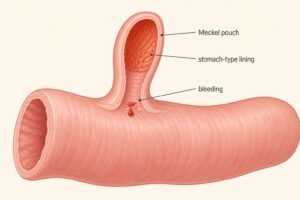
- Stool, gas or a foul discharge leaks from the navel. This can mean the old connection to the bowel stayed open (a patent duct) — it needs surgery.
- Clear fluid that looks and smells like urine leaks from the navel. This can mean a leftover channel to the bladder (a patent urachus) — it needs a scan of the urinary tract and surgery.
- Redness and swelling spreading onto the tummy skin, a bad smell, or an unwell, feverish baby. This is a sign of infection of the navel (omphalitis) — it is a genuine emergency in a newborn and needs urgent antibiotics in hospital.
Being Honest About It
The reassuring truth is that the great majority of wet, lumpy navels are simple granulomas that clear up with a few clinic visits and no lasting problem. But it is fair to be clear about the exception: infection of a newborn’s navel is not a minor matter. In countries like ours it remains an important cause of serious illness in newborns, and one of the simplest protections is careful cord hygiene — in our setting, cleaning the cord with an antiseptic such as chlorhexidine has been shown to reduce these dangerous infections. A navel that is red, swollen, smelly or leaking stool or urine is never a “wait and watch at home” problem.
What Every Parent Must Know
- A small, wet, pink lump in the navel after the cord falls off is usually a harmless umbilical granuloma.
- It is treated easily with silver nitrate in the clinic — done by a professional, never at home, to avoid burning the skin.
- A granuloma is different from an umbilical hernia (a bulge that pops out on crying) — the two are managed differently.
- See a doctor promptly if the navel leaks stool or urine, does not settle with treatment, or becomes red, swollen, smelly or the baby is unwell — these need a surgeon, not silver nitrate.
When to See a Pediatric Surgeon
See a pediatric surgeon if your baby’s navel stays wet or lumpy after the cord has fallen off, if a lump does not settle after silver-nitrate treatment, or if there is any leak of stool or urine-like fluid from the belly button. Go urgently if the skin around the navel becomes red and swollen, smells bad, or your baby is feverish or feeding poorly.
Dr. Tanmay Motiwala is a pediatric surgeon in Raipur, Chhattisgarh, trained at AIIMS Jodhpur. He assesses newborn navel problems in babies from across Chhattisgarh and central India, and can tell a simple granuloma from the few conditions that need a scan or a small operation.
Related reading:
- Umbilical Hernia in Babies: Why the Belly Button Pops Out — and Why a Coin Won’t Help
- Tongue-Tie in Babies: When It Really Matters
- My Newborn Is Still Yellow After Two Weeks — When Is It Serious?
📋 This article is part of Dr. Motiwala’s Pediatric General & Abdominal Surgery in Raipur services — see the full range of conditions treated, what to expect, and when to see a pediatric surgeon.
Related conditions parents also read
- Umbilical hernia in babies (the belly button that pops out)
- Tongue-tie in babies (when it really matters)
- My newborn is still yellow after two weeks (biliary atresia)
Worried about your child? Dr. Tanmay Motiwala consults in Raipur, Jagdalpur & Rajim. Book an appointment or call +91 83190 84711.
⚠️ Important Disclaimer: This article is for general information and educational purposes only. It is not a substitute for professional medical advice, diagnosis, or treatment. Every child’s condition is different — facts, prognosis, and management can vary significantly from case to case. Please consult a qualified pediatric surgeon for advice specific to your child.
Sources: Coran’s Pediatric Surgery (7th ed), Ch. 74 (Disorders of the Umbilicus).